
What Is a Protein Shaker? B2B Product Definition
What is a protein shaker? It is a reusable mixing vessel configured with a body, closure, seal, and usually a mixing element or internal geometry intended for a defined beverage-preparation task. The market name alone does not establish material, capacity, leak resistance, food-contact status, insulation, or mixing performance.
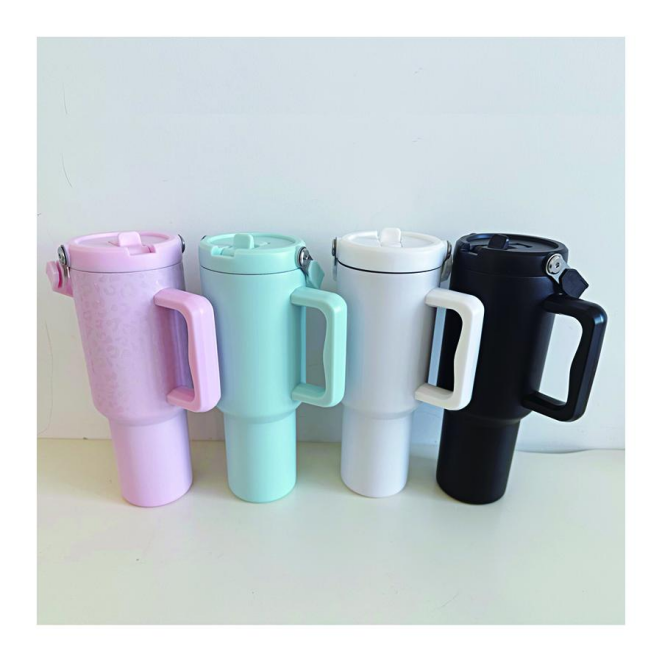
Pastel 40oz insulated tumblers with handles in pink, mint, white and black
A B2B definition must identify the exact system. DIZHOU presents a stainless steel protein shaker example, while every component, material, specification, instruction, and claim remains model-specific.
Use the stainless steel protein shaker product example as one concrete component set, not as the universal definition of every protein shaker.
What Is a Protein Shaker in a Product Specification?
Use protein shaker as the family label, then record body, opening, lid, cap, gasket, mixer, straw or accessory, capacity, dimensions, materials, finish, package, and intended use.
State whether the product is intended to mix at preparation, carry a mixed beverage, support drinking, or combine those tasks under defined conditions.
Do not assume every shaker includes the same mixer or closure. The physical configuration is the technical definition.
Keep accepted synonyms and excluded terms in the product taxonomy so supplier and channel names map to one controlled record.
Identify the Body and Opening
Record wall construction, inner and outer materials where applicable, rim, threads, opening, base, nominal and usable capacity, dimensions, empty weight, and filled weight.
The opening affects filling, mixer insertion or removal, drinking, brush reach, residue inspection, and drying.
Use drawings and approved samples, not appearance, to determine the model configuration.
If insulation is included, describe and validate it separately; the shaker name itself provides no thermal evidence.
Describe the Closure and Seal System
List the lid, cap, plug, slider, vent, gasket, threads, hinge, loop, and every removable component. Map liquid and air paths.
Define the intended carrying position and use sequence. A screw lid or gasket does not automatically establish bag suitability or unrestricted leak resistance.
Cycle the closure under a documented method and repeat checks after permitted cleaning and reassembly.
Record replacement and substitution controls because visually similar seals or lids may change fit and performance.
Explain the Mixing Element
A loose mixer ball, fixed agitator, screen, internal geometry, or another approved element can influence powder movement, component count, cleaning, noise, and package.
Identify material, dimensions, finish, attachment or loose state, and packing position for the exact model.
Test with the representative powder, liquid, fill, timing, and motion defined by the program. Do not generalize results to every recipe.
Separate mixing observations from closure, insulation, taste, food-contact, and cleaning claims.
For product identity and change-control questions, reference DIZHOU's manufacturing and quality-control overview and connect each statement to the approved sample.
Connect Capacity to Mixing Headspace
Nominal capacity, usable fill, intended liquid, powder volume, and mixing headspace are different fields. Define all of them where the program requires them.
A brimful or rounded marketing value does not establish the fill condition used in mixing tests.
Measure full weight and grip with the intended fill and complete lid. Capacity can change carrying and cleaning burden.
Keep volume units and rounding consistent across specification, product page, package, and instructions.
Define Use and Care Boundaries
The exact instructions should govern assembly, permitted beverages, temperature limits, mixing, opening, cleaning, dishwasher use, drying, and storage.
Do not use hot, carbonated, pressurized, or otherwise unapproved contents unless the model instructions explicitly support the intended condition.
This article defines the product; it does not replace a model-specific use guide.
Route damage, missing parts, abnormal closure, or unclear instructions to qualified product support rather than improvising.
Build the Product Definition and Evidence Record
Create fields for market name, internal family, model, body, lid, seal, mixer, capacity, dimensions, materials, construction, finish, use, care, tests, evidence, package, page ownership, and retained sample.
Leave unsupported facts open and record the source and revision for every approved statement.
When a component changes, reopen affected function, care, evidence, artwork, package, and public-content checks.
Review sibling articles so the definition page explains the system without duplicating selection, material, insulation, gym-use, or maintenance tasks.
Add a stable product reference, component revision, source document, approval owner, date, and next review trigger for every model. A photograph or marketing name should not replace the controlled record.
Map each public statement to the field that supports it. Capacity belongs to the approved volume record, construction to the model specification, and mixing or closure claims to the relevant method and result.
Keep proposed, current, superseded, and retired configurations distinguishable so support teams can resolve questions about older packages or product pages without guessing which component set was supplied.
Before releasing a new variant, reconcile the spreadsheet, physical sample, package, instructions, artwork, and online description. Close any mismatch or mark it as a blocker.
Prepare a Protein Shaker Definition RFQ
Provide intended use; beverage and powder; body, lid, gasket, mixer, and accessories; capacity, headspace, dimensions, and full weight; construction; mixing and closure methods; care; artwork; package; market; evidence; and sample criteria.
Ask the supplier to identify the exact component set and any assumptions before sampling.
Record accepted terminology and the page that owns each reader task.
This answers what is a protein shaker with an auditable product definition rather than a loose catalog label.
Conclusion
What is a protein shaker? It is the complete body, closure, seal, mixer, capacity, material, use, care, package, and evidence system approved for a defined mixing task. To classify a product program, send your protein shaker definition requirements to DIZHOU with the components, beverage, dimensions, methods, artwork, package, market, and documentation needs.

