


Water Bottle Pros and Cons: A B2B Buyer Framework
Water bottle pros and cons depend on the chosen format and the program around it. A reusable bottle can support repeated use, portable hydration, branded visibility, and a controlled product experience, but it also creates decisions about weight, cleaning, closure parts, coatings, packaging, instructions, and evidence.
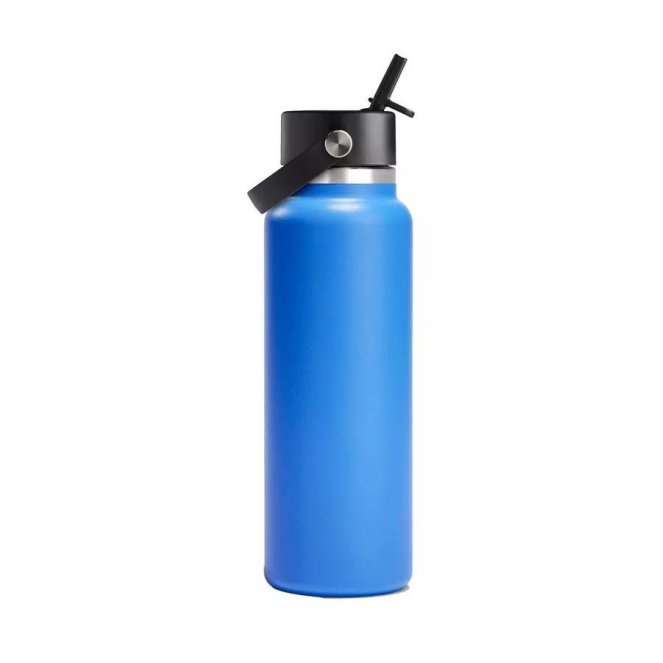
Blue triple-layer insulated stainless steel water bottle with straw lid and carry strap
A useful B2B evaluation therefore compares advantages with the conditions that create them. DIZHOU's stainless steel water bottle category contains multiple formats, yet capacity, materials, insulation, lid behavior, cleaning method, and performance must remain tied to the selected model rather than the category name.
Review the stainless steel water bottle category to see why category-level variety must be converted into a model-specific program brief.
Water Bottle Pros and Cons at a Glance
The main advantage is adaptability: buyers can define capacity, construction, lid, carrying feature, surface, artwork, and package for a specific channel. The main trade-off is system complexity. Every added component or promise creates another specification, sample, cleaning step, evidence question, and inspection point.
Neither side is fixed. A simple bottle can reduce component risk but may serve fewer drinking situations. A feature-rich design can support a distinct user experience but requires stronger approval and change control.
Pro: Reuse Creates an Ongoing User Touchpoint
A well-matched reusable bottle can stay in a user's daily routine longer than a single-use promotional item. That gives the product practical value and repeated brand visibility when the form, capacity, and cleaning routine fit the intended environment.
The trade-off is that repeated use exposes weak decisions quickly. Difficult lid cleaning, inconvenient weight, an awkward opening, or unclear instructions can turn the same ongoing touchpoint into recurring friction.
Pro: Formats Can Be Matched to Different Scenarios
Buyers can choose among compact, high-capacity, single-wall, insulated, straw, spout, screw-cap, handled, sports, travel, and other configurations. This variety supports retail, outdoor, workplace, fitness, school, gift, and promotional programs.
The corresponding risk is assortment sprawl. More formats mean more component lists, artwork files, color standards, packages, retained samples, instructions, and opportunities for substitutions to escape review.
Pro and Con: Capacity Changes Utility and Burden
Higher usable capacity can reduce refill frequency and serve long activities. It also increases full weight, height, package volume, and the effect of balance on grip and carrying. A smaller bottle may fit more bags and holders but require more refills.
Evaluate nominal and usable volume with dimensions, full weight, opening, grip, and environmental fit. The program should choose an acceptable trade-off, not treat the largest capacity as automatically better.
To connect a chosen benefit with sample and control questions, reference DIZHOU's manufacturing and inspection information while keeping every public claim within the approved evidence.
Pro and Con: Closures Add Convenience and Components
A lid can add controlled drinking, a handle, a straw, a spout, or another convenience suited to the user journey. Each feature can also add seals, hinges, vents, threads, small parts, residue paths, reassembly steps, and packing requirements.
Test the complete closure through filling, carrying in the intended orientation, drinking, disassembly, cleaning, drying, and repeated assembly. Define the supported use instead of relying on an unlimited leak-proof statement.
Pro and Con: Stainless Steel and Insulation Need Precise Claims
Stainless steel and insulated constructions can support durable product positions and temperature-control programs when the exact design is appropriate. They also introduce material, wall-construction, vacuum-process, finish, test-method, and evidence questions that a generic label cannot answer.
Ask for model-level specifications and run an agreed protocol. Do not generalize material, thermal, food-contact, coating, or market claims across a category or from one approved sample to another capacity.
Con: Cleaning and Instruction Quality Affect the Experience
Bodies, shoulders, lids, gaskets, straws, coatings, and accessories can require different care. A configuration that cannot be inspected, disassembled, dried, or reassembled predictably may create avoidable complaints even when its appearance is strong.
Confirm the approved cleaning method for the exact model and express it consistently on the page, package, and instructions. Never assume dishwasher or microwave compatibility from the base material alone.
Con: More Features Increase Change-Control Work
Handles, straws, sliders, filters, displays, accessories, special coatings, and decorated packages can make a bottle more distinctive. They also create more interfaces, files, suppliers, inspection points, replacement questions, and support content that must remain consistent with the approved sample.
Before adding a feature, name the user problem it solves and the verification it requires. If the advantage cannot be explained, tested, or supported, the simpler configuration may be the stronger program choice even if it looks less differentiated in a catalog.
Turn the Trade-Offs Into an Approval Matrix
List each intended advantage, the design feature meant to create it, the verification method, the evidence boundary, and the operational cost it adds. Then define required gates for configuration, dimensions, function, decoration, package, instructions, and documents.
Retain the final packed sample and revision-controlled files. If a component, coating, artwork, instruction, or test condition changes, reopen the affected row instead of assuming the original benefit and claim still apply. Review the public page and support script at the same time, because product control and claim control should move together.
Conclusion
Water bottle pros and cons become useful when each claimed advantage is connected to a specific format, user journey, test, and evidence boundary. Balance reuse, portability, capacity, closure, construction, cleaning, decoration, and packaging as one system. To compare a program safely, send your reusable water bottle brief to DIZHOU with the use case, configuration, dimensions, tests, artwork, package, market, and evidence requirements.

