
How to Use a Thermos for Food: Model-Aware Guide
How to use a thermos for food depends on the exact jar, lid, gasket, vent or valve, utensil, permitted food, fill guidance, preparation, carrying, opening, cleaning, and storage instructions. A general article cannot establish safe temperature, holding time, or food-handling rules.
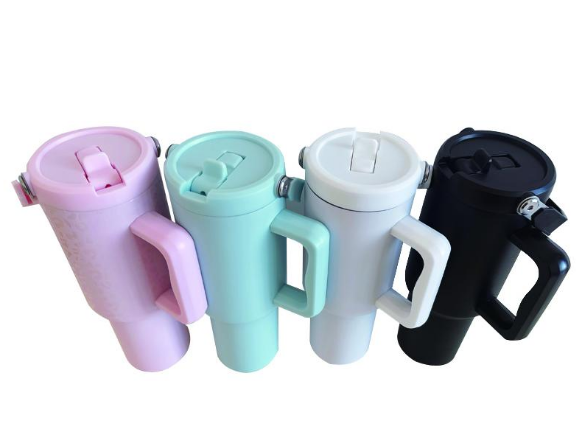
Front view of pastel 40oz insulated tumblers with sturdy handles
This guide explains the model-aware sequence for B2B content teams without repeating food jar selection or thermal validation. DIZHOU's insulated food jar example provides context only; exact construction, operation, thermal behavior, and evidence remain model-specific.
Use the insulated food jar product example only to identify one model context; obtain its current instructions for the actual use sequence.
How to Use a Thermos for Food: Identify the Exact Jar
Match the jar body, lid, gasket, vent or valve, insert, utensil, handle, and instruction revision. Confirm that every required component is present and assembled as shown.
Do not borrow a lid, seal, preparation step, or fill limit from another capacity or model.
Review permitted foods, temperature limits, preparation, carrying orientation, opening, cleaning, and storage in the current instructions.
If the jar or instructions are unclear, stop and request model-specific support.
Separate Product Instructions From Food-Safety Decisions
The product instructions govern the equipment. Qualified food-safety and operational guidance must govern preparation, cooking, serving, holding, storage, and suitability for the intended food and market.
Insulation performance does not establish that food remains safe, and this article provides no time-temperature rule.
Keep recipe, allergen, nutrition, and menu decisions with the responsible qualified owners.
Public content should make these boundaries visible rather than implying the jar replaces food-handling controls.
Assign separate owners for product instructions, recipe or menu content, food-safety review, staff training, package copy, and customer support. Each owner should know which source controls the statement being published.
If qualified food-handling guidance conflicts with a proposed marketing message, hold the message and resolve the conflict through the responsible process rather than weakening the boundary in public copy.
Follow the Approved Preparation Sequence
Use only preparation steps explicitly supported by the current jar instructions and the food program's qualified process.
This article does not prescribe preheating, cooling, water temperature, waiting time, or any other model-specific preparation value.
Record the exact jar and instruction revision used in any validation or staff guide.
When instructions or components change, reopen the affected use, evidence, and content review.
Fill Within the Model and Food Program Boundaries
Use the permitted food, usable fill, headspace, utensil access, and rim-cleaning guidance from the approved sources.
Avoid overfilling, unsupported contents, or assumptions based on nominal capacity alone.
Check that threads, rim, seal, and lid surfaces are in the required condition before closing as instructed.
Do not publish a universal fill level or food type across models.
For component and document change control, reference DIZHOU's manufacturing and quality-control overview while keeping food handling with qualified program owners.
Close, Carry, and Open as Instructed
Follow the exact lid, gasket, vent or valve, and closure sequence and use the supported carrying orientation.
A controlled closure test does not establish unrestricted leak-proof or bag-safe performance.
Use the documented opening sequence and any model-specific caution. Do not improvise force, tools, venting, or pressure-release steps.
Stop and seek qualified support for swelling, damage, abnormal resistance, leakage, missing parts, or unclear instructions.
Eat or Serve Within the Approved Program
Use the jar, lid cup, insert, or utensil only in the way supported by the product instructions and the food program.
Define whether the intended action is eating from the jar or transferring food, without assuming every rim or lid supports both.
Keep serving and holding decisions under qualified food-handling control rather than a thermal marketing claim.
Record user feedback about opening, access, drips, stability, and cleaning as product observations, not safety conclusions.
Clean, Dry, Inspect, and Store the Complete System
Follow current instructions for permitted disassembly, cleaning agents, tools, water conditions, rinsing, drying, inspection, reassembly, and storage.
State dishwasher compatibility only when the exact model instructions explicitly support it.
Check accessible threads, seals, lid channels, utensils, and inserts for residue and correct reassembly.
Route persistent odor, damage, missing parts, seal changes, or uncertain replacement compatibility to product-specific support.
Build the User Content and Change-Control Package
Align product page, package, insert, staff guide, support response, and retailer content with the same model and instruction revision.
Use approved diagrams for component identity, fill boundary, closure, opening, cleaning, drying, and reassembly.
Record prohibited claims, food-safety boundary, target market, evidence sources, owner, and next review trigger.
This is how to use a thermos for food guidance responsibly while leaving food-safety decisions to qualified controls.
Test the user content with the exact jar and a reviewer unfamiliar with the project. Record where the reviewer cannot identify a part, find a fill boundary, follow the opening sequence, or understand the care instruction.
Maintain a matrix of model, lid, seal, accessory, instruction revision, approved food-program boundary, page, package, staff guide, support script, evidence source, owner, and next review date.
When the jar, lid, valve, gasket, utensil, finish, recipe, food process, instruction, or market changes, reopen only the affected product, food-handling, care, evidence, and content approvals.
Keep superseded records available for traceability, but remove obsolete instructions from active channels so users and staff do not combine versions.
Conclusion
How to use a thermos for food safely begins with the exact model instructions and a separate qualified food-handling process. Identify the jar, use approved preparation and fill guidance, close, carry, open, clean, dry, inspect, and control every content revision. To prepare a documentation package, send your food jar instruction requirements to DIZHOU with the model, components, intended food program, package, market, and evidence needs.

