
Coffee Mug Oz: B2B Capacity Specification Guide
Coffee mug oz values should connect a declared capacity to an actual coffee-serving workflow. B2B buyers need nominal capacity, usable fill, beverage volume, headspace, equipment clearance, rim or lid, full weight, ounce-to-milliliter treatment, package labels, and model-level evidence.
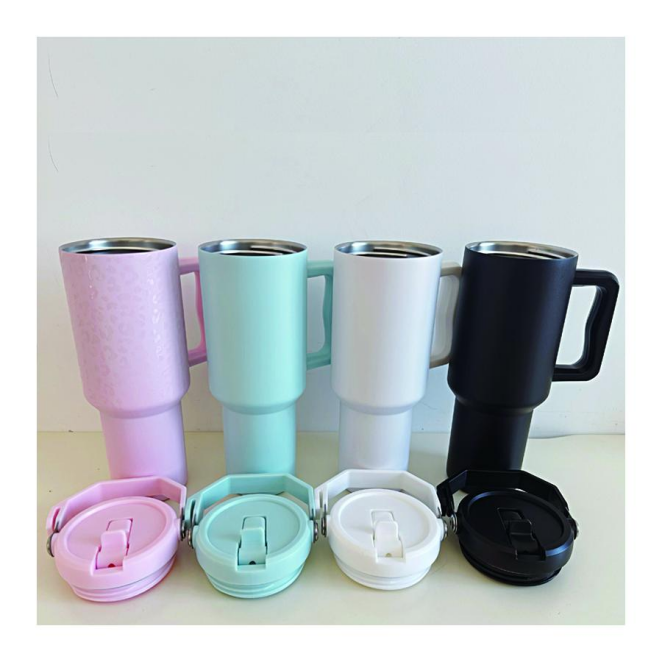
Top view of pastel 40oz insulated tumblers with handles and lids
This article focuses on coffee service and mug capacity, distinct from general bottle-ounce governance and broad mug selection. DIZHOU's stainless steel coffee mug example provides context, while every measurement and claim remains model-specific.
Use the stainless steel coffee mug product example as one capacity context, then verify every ounce and milliliter value for the exact model.
Coffee Mug Oz: Meaning, Usable Fill, and Serving Volume
The ounce value may be a nominal model name, rounded marketing value, measured volume, usable fill, or intended serving size. The specification must say which meaning applies. Keep fluid ounces separate from empty or full weight and label units clearly across files.
Record the approved conversion and rounding rule for milliliters. Do not compare values from different definitions as if they were equivalent.
Nominal capacity identifies the declared size. Usable fill reflects the intended lid, rim, and headspace condition. Serving volume reflects the actual coffee program. Create separate fields and document the method, liquid, equipment, fill line, lid state, and sample.
If milk, foam, ice, or another addition belongs to the program, include its space in the service brief without prescribing recipes. Keep internal maximum measurements from becoming public serving promises without approval.
Connect Capacity to Brew Equipment and Handoff
Measure total height, opening, rim, handle clearance, and placement under the actual brewer or a documented fixture.
Observe filling, removal, wiping, lidding if applicable, tray use, and handoff. A mug can have the right ounces and still conflict with the service station.
Check stability and grip at the intended fill and full weight.
Record equipment and fixture dimensions so another team can repeat the check.
Use a Coffee Capacity Data Record
The table below separates the key fields that sourcing, quality, service, packaging, and content teams must not collapse into one number.
Add source, revision, model, sample, method, owner, approval date, and permitted public wording to each row.
Use the same record for product pages, packaging, menus or service guides, and support scripts.
Flag missing or inconsistent values instead of silently rounding them into agreement.
Add measurement tolerance, equipment or fixture reference, sample condition, liquid, temperature if relevant to volume measurement, and the decision rule for borderline observations.
Do not invent a universal tolerance. Agree the model- and project-specific method before inspection results are visible and preserve individual measurements when variation matters.
Identify which number is permitted in the public title or package and which values remain internal technical controls. A useful record can hold several values without presenting them as interchangeable.
When the body, lid, rim, handle, coating, or filling guidance changes, review the capacity method, equipment clearance, full weight, package, photography, and every consumer-facing label.
Capacity field | Coffee-program meaning | Verification input | Risk if omitted |
Nominal oz | Declared model size | Approved specification | Rounded name treated as usable fill |
Usable fill | Volume under rim or lid guidance | Defined method and sample | Different headspace assumptions |
Serving volume | Coffee and approved additions | Service workflow | Cup conflicts with menu or equipment |
Full weight | Complete mug at intended fill | Body, lid, handle, liquid | Capacity chosen without handling burden |
Control Units, Lid, Rim, and Construction
Choose one conversion method and rounding rule, retain the unrounded internal calculation, and review the displayed pair together.
Do not change one unit independently or copy a label from a different model.
Confirm whether the target market, channel, or package needs one or both units through qualified review.
The capacity record does not establish food-contact, thermal, or compliance claims.
A lid, thick rim, internal shoulder, insert, or insulation construction can change usable space and drinking behavior.
Measure the complete approved model, not an unfinished body or another lid version.
If temperature behavior matters, validate it under a separate controlled method tied to the exact capacity and closure.
Reopen the capacity record after changes to the body, lid, fill guidance, or construction.
For measurement and revision control, reference DIZHOU's manufacturing and inspection information and align specifications, samples, inspections, labels, and packed units.
Align Packaging, Assortment, and RFQ Inputs
Different mug capacities can change artwork scale, logo position, box, insert, carton, label, instructions, and photography. Approve the decorated packed sample and keep its capacity fields linked to the same model record.
When several mug sizes exist, assign each a distinct coffee-service role rather than adding near-duplicates. Retain proposed, current, superseded, and retired capacity records for traceability.
Provide the coffee-service role; nominal capacity, usable fill, serving volume, headspace, ounce and milliliter rule; equipment clearance; dimensions and full weight; rim, lid, handle, and construction; care; artwork; package; market; evidence; and measurement criteria. Ask the supplier to identify the exact model and method behind every number.
Record accepted tolerances and how borderline results are handled. This makes coffee mug oz a controlled specification instead of a standalone marketing label.
Record rejected values and their reasons so later range planning can distinguish a genuine new service requirement from a repeated request for another familiar size. Assign a single data owner to approve changes and notify affected teams before revised numbers enter active files.
Reconcile the final packed sample against the specification and labels so an accurate worksheet does not coexist with the wrong lid, insert, or printed capacity. Add the approval date and next review trigger to close the handoff. Keep rejected configurations visible for future review.
Conclusion
Coffee mug oz values are useful only when nominal capacity, usable fill, serving volume, headspace, equipment fit, full weight, units, labels, package, and evidence share one controlled record. To prepare a capacity brief, send your coffee mug volume requirements to DIZHOU with the equipment, model, method, artwork, package, market, and approval criteria.

