


Cleaning Stainless Steel Water Bottle: Daily Care SOP
A cleaning stainless steel water bottle SOP should make routine care repeatable without pretending that every bottle has the same body, coating, lid, seal, straw, or electronic component. The current instructions for the exact model remain the controlling source for disassembly, water temperature, tools, dishwasher use, immersion, and drying.
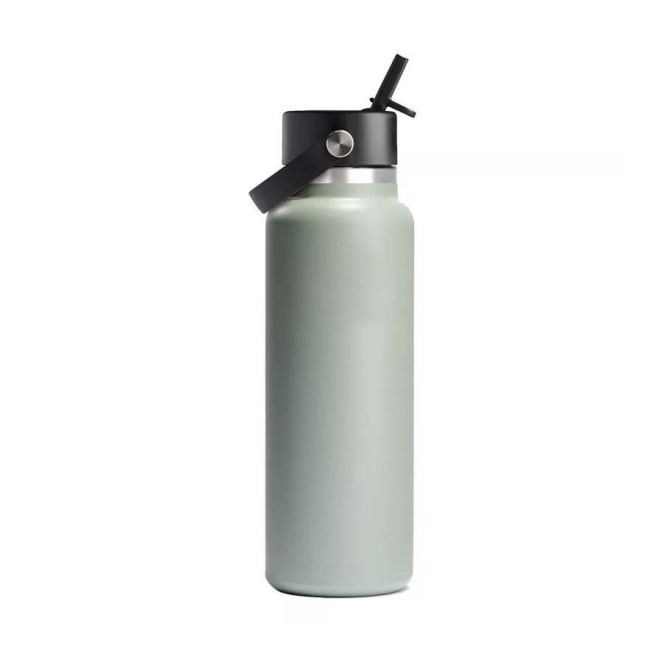
Sage green triple-layer insulated stainless steel water bottle with straw lid
This guide is written for product, content, and support teams preparing everyday user instructions. It does not repeat deep odor, staining, damage, or retirement troubleshooting. DIZHOU's drinkware category provides product-family context only; a family page cannot establish care compatibility for every configuration.
Use the stainless steel drinkware category to identify the relevant product family, then bind the care SOP to the selected model and components.
Cleaning Stainless Steel Water Bottle Programs Starts With Identification
Before writing steps, identify the model, capacity, body construction, exterior finish, artwork, lid, gasket, straw or spout, handle, accessory, and any display or electronic element. Confirm which components the approved instructions describe as removable and which must stay assembled.
Give each instruction set a model or configuration reference. A generic file named water bottle care can easily be attached to the wrong lid or finish when several similar products share a catalog family.
Define the Routine Care Moment
Separate first-use preparation, after-each-use washing, periodic inspection, and exception handling. This article covers the ordinary after-use sequence. It does not authorize special chemical treatments, disinfection methods, coating repair, electronics service, or a return-to-use decision after damage.
State the beverage and use assumptions only when they are known. A routine written for water may not fully address residue from coffee, dairy ingredients, sweeteners, powders, or food, so the instruction owner should keep the supported scope visible.
Empty and Separate Only the Permitted Parts
Remove remaining liquid and follow the model instructions for opening the lid and separating identified components. Keep small seals and accessories organized so they are not lost, reversed, stretched, or reinstalled in the wrong location.
Do not pry, cut, or force parts that are not shown as removable. If a component diagram is missing or the assembly differs from the approved sample, stop the routine and obtain product-specific guidance.
Wash the Body and Accessible Surfaces
When the instructions permit hand washing, use the approved water condition, cleaning agent, and non-abrasive tools. Reach the interior, rim, threads, and accessible shoulders without scratching the surface or forcing a tool into a sealed interface.
Treat the exterior finish and decoration as part of the product. A method suitable for bare stainless steel may not be suitable for a coating, printed area, adhesive label, display, or bonded component.
To connect instruction changes with production records, consult DIZHOU's manufacturing and quality-control overview and assign owners for sample, component, and content revision control.
Clean Lids, Seals, Straws, and Flow Paths
Clean each permitted lid component individually, paying attention to threads, drinking openings, vents, sliders, plugs, straws, and the accessible surfaces around gaskets. Use the illustrated disassembly order when one is provided.
Rinse according to the approved instructions and check that visible residue is removed. Routine care should never rely on an unrestricted leak-proof or hygiene promise; it should describe the steps the exact configuration supports.
Dry Before Reassembly and Storage
Place the body and permitted components in the instructed draining position with airflow to accessible surfaces. Keep the bottle open until parts are dry enough for reassembly under the approved method, rather than trapping residual moisture in a closed unit.
Do not improvise with an oven, microwave, flame, or uncontrolled heat. The visible steel body does not establish the heat limits of coatings, seals, adhesives, plastics, electronics, or decoration.
Reassemble and Perform a Routine Function Check
Return each seal and component to its documented position and confirm that the lid engages as shown. A simple water check can confirm ordinary flow and assembly before the next use, but it should not be presented as proof of unrestricted transport or long-term performance.
If a part is missing, swollen, torn, misaligned, loose, or different from the approved configuration, route the issue to model-specific support. Deep troubleshooting belongs outside this daily care SOP.
Test the Instruction With a Dry Run
Ask someone who did not draft the SOP to identify the model, separate only the permitted parts, point to each cleaning surface, arrange the drying position, and reassemble the unit using the written steps and approved diagrams. Observe where the reader hesitates or needs information that is not present.
Revise ambiguous component names, sequence words, images, and cautions before release. A technically correct instruction can still fail operationally if users cannot match the language to the actual lid, seal, straw, or coating in front of them.
Define the Routine Care Escalation Boundary
List the observations that end the daily sequence and trigger product-specific support, such as an unidentified part, missing instruction, damaged seal, loose component, electronics exposure, persistent residue, visible surface change, or failed reassembly. Keep the wording descriptive rather than diagnosing a cause.
The escalation note should identify the model and affected part and preserve photographs or sample references when appropriate. It should not recommend repair, chemicals, replacement compatibility, or continued use without suitable model-level guidance.
Control the Care Instructions Across the Program
Keep the product page, packaging, insert, support script, and any retailer content aligned with the same model and instruction revision. State dishwasher compatibility only when the exact current instructions explicitly allow it and include any component or rack limitations they specify.
When the lid, seal, coating, artwork, electronics, cleaning method, or supplier instruction changes, review the public care content before release. Retain the approved unit and dated instruction file as the operational reference.
Conclusion
A cleaning stainless steel water bottle SOP works when it identifies the exact configuration, limits itself to supported routine steps, and keeps washing, drying, reassembly, inspection, and instruction control connected. For model-specific content preparation, send your bottle care documentation requirements to DIZHOU with the model, components, finish, intended use, target market, and proposed user sequence.

