


How to Clean Stainless Steel Water Bottle Components
For readers asking how to clean stainless steel water bottle components, first identify the exact body, finish, lid, gasket, straw, accessory, and any electronic component. Then follow the model's current instructions. Stainless steel in the body does not establish that the complete bottle is dishwasher-safe, compatible with a particular cleaner, or suitable for immersion.
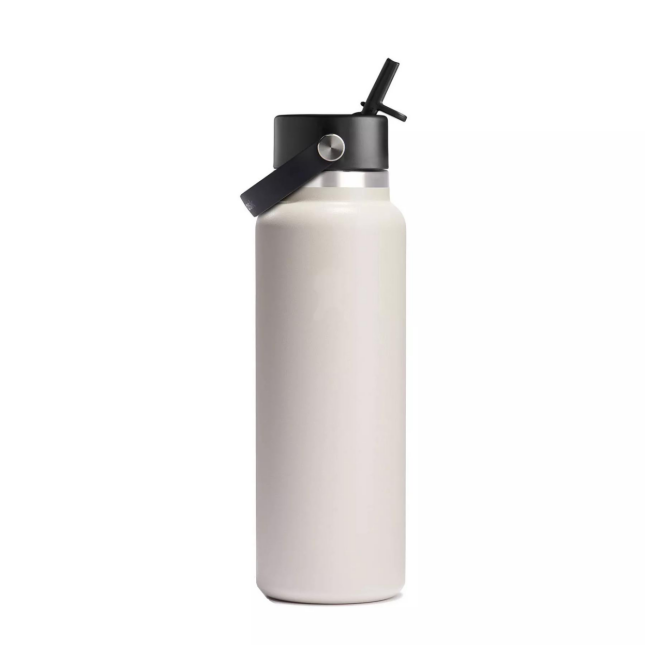
Cream triple-layer insulated stainless steel water bottle with straw lid and carry strap
The routine below is intentionally model-aware and avoids universal sanitation, food-safety, or chemical claims. It can support general hand-care content, but the selected product instructions remain authoritative. DIZHOU's drinkware range includes different constructions, so one cleaning statement should not be copied across every bottle or mug.
Because product constructions vary, use the stainless steel drinkware category only to identify the relevant family and then obtain instructions for the exact model.
Before Cleaning, Identify the Complete Bottle System
Check the model name or item reference and gather its instructions. Note the body construction, coating or print, lid type, removable seals, straw or spout, handle, accessory, and any temperature display, battery, sensor, or other electronic feature.
If instructions are missing or unclear, pause before using a dishwasher, heat, abrasive tool, solvent, bleach, concentrated acid, or another strong treatment. Ask the supplier or brand for the approved care method rather than inferring compatibility from appearance.
How to Clean Stainless Steel Water Bottle Components by Hand
For a conventional non-electronic bottle whose instructions allow hand washing, empty the contents, separate removable parts as directed, and rinse away loose residue. Use the instructed amount of mild dish detergent with water at the permitted temperature and a non-abrasive tool that reaches the interior without damaging the finish.
Clean the rim, threads, drinking opening, and accessible lid surfaces individually. Avoid forcing tools beneath bonded parts or removing seals that the instructions do not identify as removable. Rinse until visible detergent and residue are gone, following any model-specific limits.
Clean Lids, Gaskets, Straws, and Small Passages
Residue often remains where liquid, air, and moving parts meet. Inspect under removable gaskets, around sliders or plugs, inside straws and spouts, and along threads. Use only tools and disassembly steps permitted by the model instructions.
Keep parts organized so each seal returns to the correct position and orientation. A lid that is reassembled incorrectly can change flow or closure behavior, so check the component diagram and perform a simple water-use check before the next filled carry.
Dry Every Accessible Part Completely
Drain the body and components and place them separately in a ventilated position allowed by the instructions. Leave the bottle open during drying rather than closing residual moisture inside. Confirm that hidden channels and the underside of seals are dry before reassembly.
Do not use an oven, microwave, direct flame, or uncontrolled high heat to speed drying. Heat can affect coatings, seals, adhesives, electronics, or shape even when the visible body is stainless steel.
For a branded program, connect care wording to DIZHOU's manufacturing and quality-control overview so component, finish, sample, and instruction changes remain controlled.
Is the Bottle Dishwasher-Safe? Check the Exact Model
Dishwasher compatibility is a product-level instruction, not a general property of stainless steel. The body, coating, artwork, lid, gasket, straw, adhesive, and electronic parts may have different limits. Use a dishwasher only when the current instructions explicitly allow it and follow the stated rack, cycle, and component guidance.
If the instructions are silent, do not describe the bottle as dishwasher-safe in consumer content. Use the approved hand-care method or request confirmation for the exact configuration. A claim from another capacity, finish, lid, or product family is not a substitute.
Handle Odor, Staining, or Residue Without Guessing
First repeat the approved disassembly, cleaning, rinsing, and drying sequence and inspect the lid and seals. Residual beverage oils, sweeteners, dairy ingredients, or incomplete drying can affect odor, but the correct response still depends on the materials and instructions.
Do not publish or improvise chemical recipes when compatibility is unknown, and never mix cleaning chemicals. Escalate persistent odor, discoloration, corrosion-like marks, damaged coating, swollen seals, or trapped residue to the supplier or brand for model-specific guidance.
Know When to Stop Using or Replace a Component
Review the bottle before reuse. Stop and request guidance if the lid no longer assembles correctly, a seal is missing or damaged, an electronic part is compromised, sharp damage appears, residue cannot be removed, or the instructions identify another retirement condition.
Replacement lids, seals, or straws should be confirmed for the exact model. Visual similarity does not establish fit or performance, and an unverified substitute can change closure and cleaning behavior.
Verify Care Instructions Before Release
Have the product, quality, packaging, and content teams perform the written care sequence on the approved unit. Confirm that each stated part is removable as described, tools can reach the named surfaces, drying is practical, and the bottle can be reassembled without an unstated step.
Record the model, component revision, finish, instruction revision, and result. If a later change affects the lid, coating, artwork, electronics, seal, or cleaning method, reopen the care review instead of reusing the earlier wording automatically.
Create Better Care Content for a B2B Bottle Program
Product teams should connect the approved care method to the exact model, component list, finish, artwork, and instructions. Use clear diagrams for permitted disassembly and reassembly, identify what must remain dry, and state dishwasher compatibility only when it is documented.
Keep the website, package, insert, and support response aligned. When a lid, coating, electronics package, or cleaning instruction changes, review every public care statement before the new configuration is released.
Conclusion
Knowing how to clean stainless steel water bottle components means cleaning the complete model, not treating every steel body alike. Follow the current instructions, separate permitted parts, clean gently, rinse, dry fully, verify reassembly, and make dishwasher decisions only at model level. For product-specific care documentation, send your bottle configuration and care questions to DIZHOU with the model, finish, lid, components, target market, and proposed instructions.

