


Best Kids Stainless Steel Water Bottle: B2B Guide
The best kids stainless steel water bottle for a B2B program is the bottle that fits the defined user setting, carrying routine, capacity, handling ability, lid system, cleaning process, decoration, packaging, and evidence plan. It should not be chosen from an unverified safe-for-kids label or a consumer popularity list.
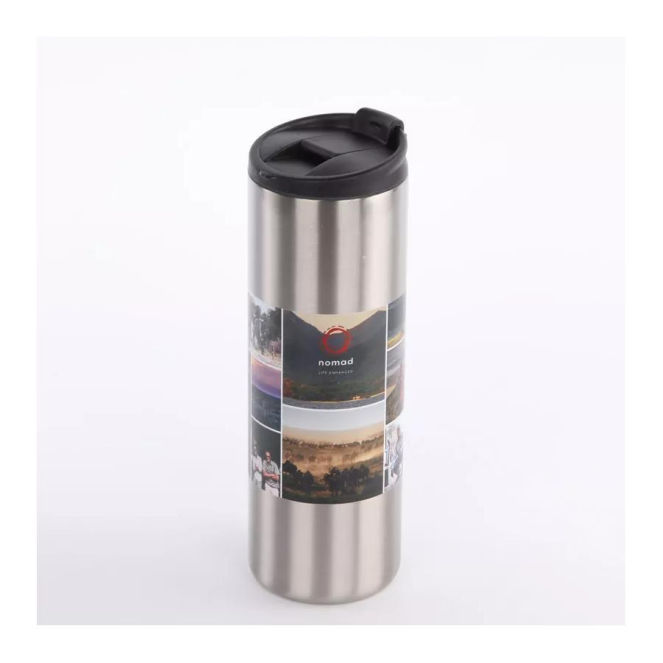
Stainless steel double-wall travel tumbler with black lid and printed wrap sleeve
This guide helps school, retail, gift, and brand teams prepare a controlled product brief. DIZHOU presents a kids cup and bottle product example, while age suitability, materials, components, food-contact status, leak performance, and target-market requirements must be verified for the exact model.
Use the kids stainless steel cup and bottle example to frame model-specific questions, not as evidence for every kids bottle configuration.
What Defines the Best Kids Stainless Steel Water Bottle?
Name the intended setting and supervision: classroom, lunch bag, sports activity, home, travel, retail, gift, or another program. Define how the bottle is filled, carried, opened, used, closed, cleaned, dried, and stored during that setting.
Use the actual user and channel requirements instead of assigning an age range from appearance. Age, developmental, supervision, small-parts, warning, and legal questions require product-specific and market-specific review.
Choose Capacity With Full Weight in Mind
Specify nominal and usable volume, full weight, height, body diameter, opening, base, and the time between expected refills. A larger capacity may reduce refilling but can increase carrying burden and package size.
Ask representative users or approved evaluators to handle filled samples under the planned supervision and protocol. Record grip, balance, lifting, drinking angle, set-down stability, bag fit, and interference with surrounding objects.
Evaluate the Lid as a Component System
Document the cap, spout or straw, gasket, vent, hinge, handle, threads, and any removable accessory. Check the intended opening and closing sequence, required force, component retention, flow, and reassembly after cleaning.
Do not translate one controlled closure test into an unrestricted spill-proof or leak-proof claim. Define orientation, fill condition, duration, movement, and pass criteria for the supported use.
Verify Materials at Model and Component Level
List the body, inner and outer construction where applicable, lid, seal, straw, coating, print, adhesive, and accessory materials from the approved specification. Stainless steel in the body does not establish the status of every contact or decorative component.
Food-contact, chemical, small-parts, age, warning, and other market requirements should be assessed for the exact configuration using current suitable evidence and qualified guidance. Do not copy broad supplier or family statements into the article.
For artwork, component, and packed-sample planning, consult DIZHOU's product development and customization services and define the exact project scope and approval records.
Design Cleaning for the Intended Caregiver Workflow
Review permitted disassembly, access to the body and lid, straw or spout cleaning, seal placement, draining, drying, and reassembly. The routine must be practical for the person expected to perform it and consistent with the exact instructions.
State dishwasher compatibility only when the model instructions explicitly support it. A stainless steel body alone does not establish the limits of coatings, artwork, lids, seals, straws, adhesives, or accessories.
Plan Decoration Without Hiding Function
Define artwork area, orientation, color reference, finish, user label, identification field if needed, and acceptance criteria. Keep important assembly, care, or warning information visible and separate from decorative graphics.
Approve artwork on the final body and coating. A flat proof cannot show how the design reads around a curve, below a lid, beside a handle, or after the bottle is placed in its package.
Run a Controlled Handling and Care Review
Create a repeatable evaluation sequence for filling, lifting, carrying in the intended position, opening, drinking, closing, setting down, packing, disassembly, washing, drying, and reassembly. Use the approved supervision and evaluator method for the program and identify the exact sample used.
Record observable results and measured constraints separately from preference. A comment such as easy to use should be translated into the action, force, time, error, fit, or instruction issue that the product team can review.
Control Colors, Lids, and Other Variants
If the program includes several capacities, colors, artworks, lids, or accessories, define which technical evidence and tests are shared and which variants need their own approval. Do not assume a visual change is irrelevant when it can affect coating, print, package, instruction, or component identity.
Maintain a variant matrix with body, lid, seal, straw, handle, finish, artwork, package, instructions, evidence, and retained-sample references. Review the matrix before accepting substitutions or adding a new assortment item.
Approve the Complete Packed Program
Review the bottle, lid, seals, straw or spout, accessories, instructions, labels, insert, and box as one unit. Packaging should protect the closure and finish and should not allow loose components to create confusion during unpacking.
Retain the approved packed sample and link it to component lists, drawings, artwork, instructions, test methods, and evidence boundaries. Reopen affected approvals when any part changes.
Prepare a Kids Bottle RFQ and Review Matrix
Provide the user setting and supervision assumptions; capacity, dimensions, and full-weight target; body, lid, seal, straw, handle, and accessory configuration; opening and closure tests; care method; materials; artwork; package; target market; evidence needs; and approval owners.
Use required gates for documented configuration and evidence, then score handling, cleaning, visual fit, and packaging only among samples that pass those gates.
Conclusion
The best kids stainless steel water bottle is the configuration that fits a clearly defined setting and passes model-specific handling, component, cleaning, packaging, and evidence review. Avoid universal age, safety, leak, or compliance claims. To compare candidates, send your kids bottle program requirements to DIZHOU with the user setting, capacity, closure, materials, artwork, package, market, and verification plan.

