


Best Insulated Shaker Bottle: B2B Validation Guide
The best insulated shaker bottle is the exact bottle, lid, seal, mixer, and care system that meets a defined beverage and gym-use brief under a repeatable validation method. Insulation should not be treated as a universal retention number or as a substitute for mixing, closure, cleaning, and carrying performance.
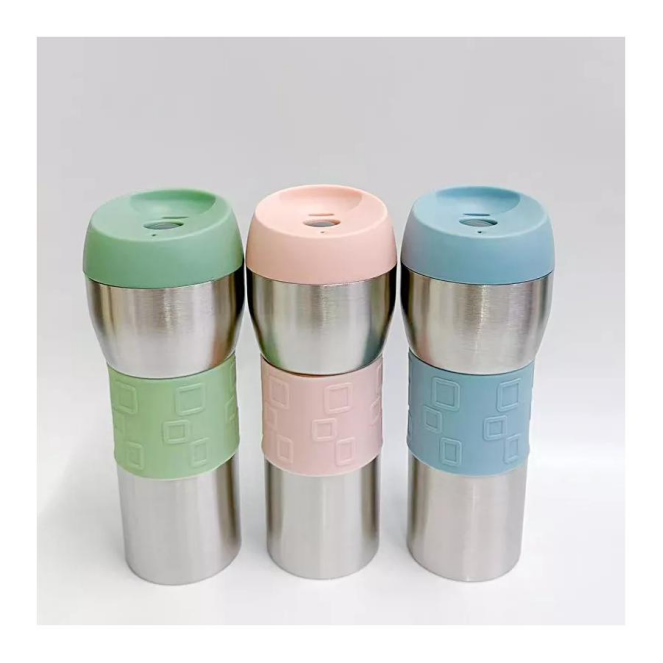
Three stainless steel double-wall coffee tumblers with silicone sleeves in green, pink and blue
This guide is limited to insulation and temperature-related selection, distinct from general shaker and material guides. DIZHOU presents a stainless steel protein shaker example, while construction, capacity, thermal behavior, materials, and closure claims remain model-specific.
Use the stainless steel protein shaker product example as one model context, then verify wall construction and thermal evidence for the selected configuration.
What Defines the Best Insulated Shaker Bottle?
Specify the beverage, powder, intended starting condition, use duration, refill pattern, gym journey, carrying orientation, cleaning routine, and target market. These inputs determine what thermal behavior actually matters.
Set a program criterion before comparing samples. Do not begin with a supplier headline and then design the method to reproduce it.
Confirm the Exact Wall Construction
Record the body materials, single- or multi-wall construction, vacuum or other insulation description, base closure, rim, opening, welds, and finish from the approved model specification.
Do not infer insulation from body thickness, weight, appearance, or a family name. Confirm the exact capacity and construction tested.
Define Beverage and Fill Conditions
Document the representative liquid, powder, preparation, starting condition, fill level, headspace, mixing sequence, and closing delay. Keep the recipe and nutritional decisions with qualified program owners.
Water-only screening may help develop a method, but it does not automatically represent a mixed beverage. State what was actually tested.
Control the Thermal Test Method
Fix ambient conditions, starting bottle condition, lid state, timing point, duration, measurement locations, opening events, instrument, and recording intervals before testing candidates.
Use the same method for each identified sample. Record deviations instead of hiding them inside an average or broad performance statement.
Define sample identity, repetition plan, instrument check, data owner, and acceptance rule before results are visible. The program should not select a method or threshold after learning which candidate appears favorable.
Review individual runs as well as the summary. Investigate an unusual result against fill, timing, lid assembly, ambient conditions, probe position, and sample configuration before treating it as product variation.
When testing reaches decoration and packaging, consult DIZHOU's product development and customization services and bind the requested scope to the approved sample.
Separate Insulation From Mixing Performance
Thermal behavior and powder mixing are different functions. Run a controlled thermal protocol and a separate representative mixing protocol so the team can identify which body, lid, mixer, or user action affects the result.
Do not present a favorable temperature observation as evidence of mixing, leak resistance, food-contact status, or suitability for every beverage.
Evaluate the Lid and Seal as Thermal Interfaces
Record the lid, drinking opening, vent, gasket, threads, mixer, and accessory configuration. Openings and assembly can affect both thermal observations and the user experience.
Cycle, clean, and reassemble the approved lid, then repeat the method if a component changes. Keep any closure wording bounded to the tested orientation and conditions.
Include Full Weight and Carrying Trade-Offs
Measure empty and filled weight, height, diameter, grip, balance, handle or loop, bag position, and package. Added wall construction can change the load and footprint even when nominal capacity stays the same.
Simulate the intended gym journey with the filled sample. Insulation should not win the decision if portability, mixing, access, or cleaning no longer fits the program.
Compare the insulated candidate with a relevant non-insulated or alternate construction only when capacity, lid, mixer, and use are sufficiently aligned. Otherwise record the differences instead of attributing every result to insulation.
Include packing and distribution teams in the review because added body diameter or weight can alter inserts, carton arrangement, shipping assumptions, shelf use, and the number of units that fit the intended presentation.
Document the accepted trade-off in the approval record so later teams understand why the program selected a particular construction rather than simply repeating a best-product label.
Check Exterior Condensation and Surface Behavior
Observe the identified sample under the planned beverage and ambient conditions for visible moisture, grip changes, coating behavior, and interaction with bags, desks, or equipment. Use a defined observation method.
Do not promise condensation-free performance without suitable model-level evidence. Report the conditions and observed outcome only.
Align Cleaning, Decoration, and Packaging
Confirm permitted cleaning, lid and mixer disassembly, draining, drying, and reassembly. Approve artwork and coating on the final insulated body and protect all components in the package.
Retain the decorated packed sample with instructions, method, results, evidence boundaries, and revision owners. Reopen affected checks after a component change.
Prepare an Insulated Shaker RFQ
Provide the beverage and powder; capacity and fill; body construction; lid, seal, and mixer; starting and ambient conditions; thermal and mixing methods; full weight; care; artwork; package; market; evidence; and sample criteria.
This turns the best insulated shaker bottle query into a repeatable thermal decision without duplicating general shaker selection content. Record rejected constructions, accepted trade-offs, responsible owners, and the next evidence or component change that should trigger a new test.
Conclusion
The best insulated shaker bottle is the exact configuration that meets a defined thermal objective without compromising mixing, carrying, cleaning, packaging, or evidence control. To build a comparison, send your insulated shaker validation requirements to DIZHOU with the beverage, model, method, full-weight constraints, artwork, package, market, and documentation needs.

