
Best Cup for Coffee: B2B Service-Format Guide
The best cup for coffee is the format that fits the complete service workflow: brewing equipment, serving volume, handoff, drinking location, rim or lid, carrying position, cleaning, branding, packaging, and evidence. A consumer popularity list cannot define that B2B fit.
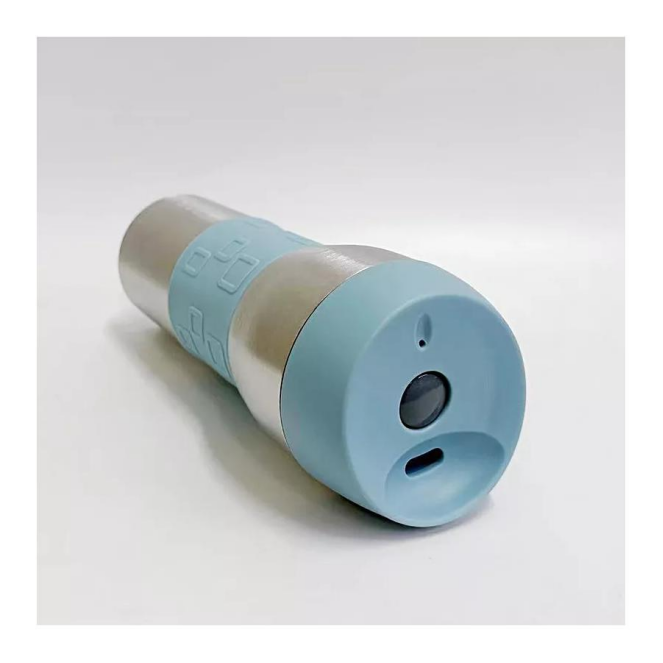
Stainless steel double-wall coffee tumbler with blue silicone sleeve lying on its side
This guide focuses on coffee-service roles rather than branded mug design, commuter travel, or multi-beverage validation. DIZHOU's stainless steel drinkware category provides format context, while every capacity, material, construction, lid, and performance statement remains model-specific.
Use the stainless steel cup and drinkware category to identify candidate formats, then validate the selected cup against the actual coffee-service workflow.
What Defines the Best Cup for Coffee Service?
Map the path from brewing to filling, handoff, drinking, set-down, refill, collection, washing, drying, and storage. Identify the user, location, beverage, service interval, and responsible operator.
Define the primary job: desk service, cafe merchandise, hospitality, meeting room, event, retail, gifting, or another approved scenario. A cup that fits one job may add friction in another.
Set required gates for equipment clearance, usable volume, stability, handling, rim or lid, cleaning, and evidence before comparing aesthetics.
Record excluded uses so sales and content teams do not turn a focused cup into a universal coffee solution.
Choose Open, Lidded, or Travel-Oriented Service
An open cup emphasizes direct-rim drinking and stationary service. A lidded cup can change flow, aroma, splash, residue, component count, and cleaning. A travel-oriented format adds carrying and fit requirements.
Describe the actual body, rim, opening, lid, gasket, handle, base, and intended orientation instead of relying on inconsistent words such as cup, mug, or tumbler.
Use a dedicated sample for each materially different closure. Do not test an open body and assume a later lid leaves the experience unchanged.
Keep leak, bag, thermal, microwave, and dishwasher statements inside the exact model instructions and evidence.
Fit the Cup to Brewing and Serving Equipment
Record clearance below brewers or dispensers, opening width, total height, handle position, base, fill line, and the space needed to place and remove the cup.
Check the actual equipment or a documented fixture. A nominal capacity does not prove that the cup fits the brewing station or service tray.
Observe filling, wiping the rim, fitting the lid if used, and handing the cup to the user. Translate delays or awkward movements into measurable requirements.
Include package and storage fixtures when cups are pre-positioned, stacked only if the approved model supports it, or arranged in gift sets.
Specify Coffee Volume and Headspace
Separate nominal capacity, usable fill, serving volume, headspace, and any room for milk, foam, ice, or another approved addition. State the method and units.
Use representative coffee service rather than a brimful number alone. The correct fill should support the intended rim or lid behavior without becoming a safety promise.
Measure empty and filled weight and review balance in hand and at set-down. Larger serving volume can change grip, cooling, refill, and package decisions.
Keep exact capacity and fill wording consistent across specification, product page, package, menu or service guide, and support content.
When service requirements reach decoration and packaging, consult DIZHOU's product development and customization services and define the exact approval scope.
Evaluate Rim, Lid, Handle, and Base Together
Review rim comfort, lip shape, drinking angle, lid flow, vents, gasket, threads, handle clearance, and base stability under the intended service sequence.
Coffee with milk or sweetener can expose residue paths that water-only tests miss. Include representative use when it belongs to the program.
Cycle, clean, dry, and reassemble the complete configuration. Record the tested orientation and avoid unrestricted closure claims.
If a handle or lid changes, repeat affected balance, equipment, drinking, cleaning, artwork, and packaging checks.
Control Materials, Construction, and Thermal Claims
Record body and component materials, wall construction, finish, coating, print, and model references from approved documents. Do not infer stainless grade or insulation from appearance.
If temperature behavior matters, define starting condition, fill, ambient, lid state, timing, measurement points, and acceptance rule before testing.
A thermal observation does not establish food safety, serving suitability, or performance for another capacity, lid, beverage, or environment.
Keep material and target-market statements tied to suitable evidence for the exact cup and components.
Plan Cleaning, Branding, and Packed Presentation
Confirm permitted care for the body, lid, gasket, handle, coating, and print. Test draining, drying, and storage in the real service environment.
Define logo view during handoff and drinking, artwork area, color, finish, labels, instructions, insert, and box. Approve the decorated cup rather than a flat proof alone.
Review the complete packed or service-ready unit for component count, protection, presentation, and information consistency.
Retain the approved unit with specifications, methods, artwork, instructions, evidence boundaries, and change owners.
Prepare a Coffee Service Cup RFQ
Provide the service role; coffee and additions; equipment and tray constraints; nominal and usable capacity; dimensions and full weight; rim, lid, gasket, handle, and base; construction; tests; care; artwork; package; market; evidence; and approval criteria.
Ask suppliers to identify any configuration assumptions so quotes and samples refer to the same service task.
Record accepted trade-offs and rejected formats. This prevents a future variant from reopening the decision without new requirements.
The framework identifies the best cup for coffee service without duplicating general coffee mug or commuter content.
Conclusion
The best cup for coffee is the exact service format that fits brewing, filling, handoff, drinking, cleaning, branding, packaging, and evidence under one controlled brief. To compare coffee-service formats, send your coffee cup program requirements to DIZHOU with the equipment, serving volume, components, tests, artwork, package, market, and approval needs.

